
Access Control Installation in Gloucester
EN 60839-compliant access control system installers covering Gloucester and the wider Gloucestershire area — design, install, certification and servicing.
Access Control Systems for Gloucester Properties
We install networked access control across Gloucester — fob, keypad, biometric and video door entry, scaled from a single door up to multi-site portfolios.
Fob, keypad and intercom systems for the multi-let buildings at Barnwood and Eastgate. Gloucester is our home city, so it is the area we know best. From the historic Docks and Quays through to the business parks at Barnwood, Quedgeley and Waterwells, our engineers are on the ground every week — which means faster site surveys, faster installs and faster response when a system needs attention.
Access control demand in Gloucester is concentrated in multi-tenanted buildings — the converted offices around Barnwood and the city centre, residential blocks near the Docks and Quays, and education and clinical sites where different groups need different levels of access at different times. The common thread is not the door hardware but the administration: who can revoke a lost fob at 7am, and how quickly.
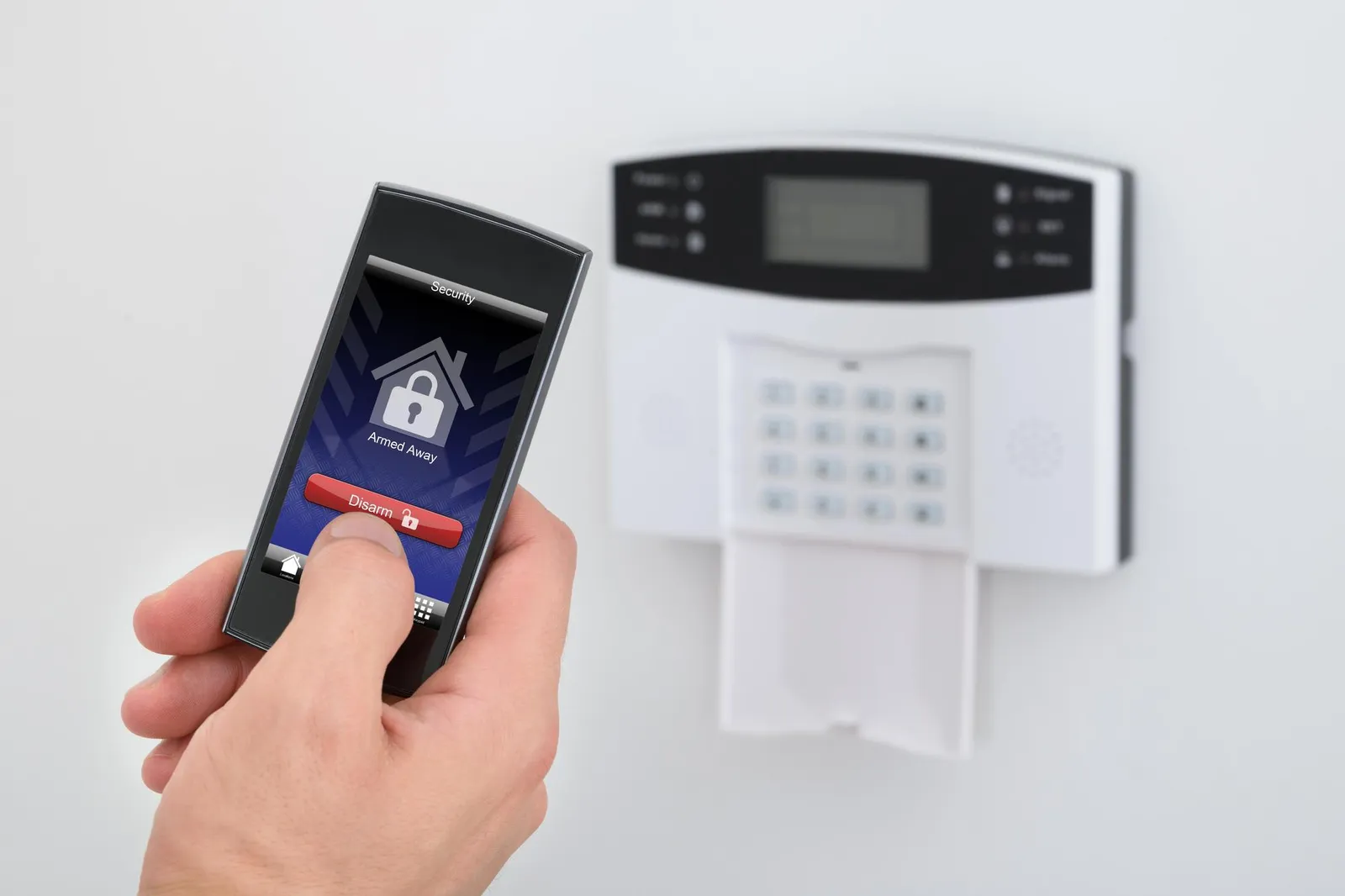
Cloud-managed systems have largely settled that question. Credentials are managed from a browser or phone, a lost fob is revoked in seconds rather than requiring an engineer visit, and access rights can be scheduled by time of day and by door.
Access Control Built for Gloucester
Choosing between fob, keypad, biometric and video entry
The credential is the decision that shapes everything else. Fobs and cards are the workhorse for Gloucester offices and multi-let buildings: cheap to issue, instant to revoke, and easy to report on. Keypads suit low-turnover sites but codes migrate — they get shared, written down and never changed — so we generally specify them only alongside another factor or on internal doors. Biometrics remove the shared-credential problem entirely and have become dependable enough for daily commercial use, but they carry data-protection obligations a fob does not, and staff consultation matters before rolling them out.
Video door entry earns its place wherever the person granting access cannot see the door — residential blocks near the Docks, clinics with a controlled waiting area, offices where reception is not always staffed. Modern systems answer to a phone app, which means a resident or manager can grant entry from anywhere, and every grant is logged.
The fire-alarm interface: where DIY installs fail
Where a door on an escape route is held locked by electrical means against the direction of escape, it has to release on fire alarm activation — that is what BS 7273-4 covers, and the interface between the access system and the fire panel is where it is most often got wrong. A door that always opens freely from the inside has nothing to release. The defects we find most on systems fitted by general contractors are maglocks holding firm during an alarm because nobody wired the release, and fail-secure locks specified on doors that needed fail-safe.
We design the two systems together — release wiring, door-by-door fail-safe or fail-secure decisions justified in writing, and a commissioning test that proves every escape-route door drops when the panel says so. If you already have access control in a Gloucester building and have never seen that test done, it is worth asking when it last was.
Scaling from one door to a portfolio
A single-door intercom and a fifty-door networked estate are the same discipline at different scales, and the mistake to avoid is buying a one-door product that cannot grow. For letting agents and facilities managers running multiple Gloucester properties, a cloud platform means one dashboard across every site, credentials that follow the tenant rather than the building, and an audit trail that satisfies both insurers and HR. We install systems that start at one door and scale without replacement — and we take over orphaned systems whose original installer has disappeared. What a take-over survey looks for, and the grade an access control system is designed to, are both explained on our access control page.
What happens on a rural site when the link drops
Much of our Gloucestershire access control work is on sites where the broadband is the weakest part of the system. Units on the Forest of Dean estates around Cinderford and Coleford, farm and equestrian premises and village halls often run on a thin fixed line or a mobile router. Cloud management still suits those sites, provided the system is specified to work without its connection.
The question to put to any supplier is where the decision gets made when the link is down. On a properly specified system it is made at the door: the controller holds its own copy of the permissions, so the cloud is how you administer it, not how it decides. What stops is the live half: revoking a fob that minute, unlocking remotely, and events reaching the log in real time.
That is worth proving rather than assuming. We pull the network at commissioning, show the doors still working on cached credentials, and confirm how many events the controller stores before it overwrites.
Cotswold frontages: the fixings decide the specification
Cirencester, Tetbury and Winchcombe change where the difficulty sits. A reader or intercom panel on a street elevation is a visible alteration, and whether it needs consent depends on the building. Listed status is the usual trigger; in a conservation area it turns on whether the external appearance is materially changed, and that decision sits with the local planning authority rather than with us.
Those constraints push the specification towards wireless readers and battery-powered locking, which suits an escape route for a specific reason: the inside lever opens by hand every time, so there is nothing for an alarm to release. Free mechanical egress is what makes it acceptable, not a release signal. A door that is genuinely held locked against the direction of escape needs a mains supply and a monitored connection from the fire alarm, so that one gets cabled, listed building or not.
Fire doors inside these buildings decide their own ironmongery. Cutting into the leaf for a mortice lock means intumescent protection in the right places and fixings the doorset's certification allows, which on older stock points to surface-fixed or wireless hardware instead, which still has to suit the doorset.
One unit in a village, or units across the county
One door on a unit at Bishop's Cleeve and a dozen doors between Gloucester, Cirencester and the Forest of Dean run the same hardware and are not the same job to administer. On one site the person managing access is standing in the building; across a county they are not. That is the argument for standardising on one platform.
Standardising keeps the engineering simple too. One controller family means an engineer's spares fit every site, permissions and firmware behave the same way everywhere, and a fault can usually be identified from the management platform before anyone sets out. A change made in a browser is a change nobody drives across the county to make.
Where a portfolio has grown piecemeal we would rather rationalise it than strip it out. A survey establishes what is fitted, then the sites move onto one platform in phases, so no building loses working access.
The Gloucester Difference
We are physically here
Our engineers live in and around Gloucester, so call-outs to GL postcodes are routinely same-day rather than next-week.
Mixed-estate experience
Industrial units at Waterwells, retail at the Quays, schools across Tuffley — we have installed in all of them and know what each underwriter expects to see.
Documented compliance
Every Gloucester job ships with as-fitted drawings, commissioning records and a maintenance schedule that lines up with your Fire Safety Order paperwork.
No-pressure quoting
We will tell you when an existing panel can be reused and when it cannot. Most local quotes are returned within 48 hours of the site survey.
Common Questions
What affects the cost of access control installation in Gloucester?+
Four things dominate: the number of doors, the credential type (fob and keypad hardware costs less than biometric or video entry), whether doors need new locking hardware or can reuse what is fitted, and whether the system is standalone or networked with cloud management. A single-door fob system for a small office sits at the affordable end; a networked multi-door system across a multi-let building is a bigger project. We quote itemised after a free survey, so you can see exactly where the money goes.
Can access control be linked to the fire alarm in my Gloucester building?+
It depends on how the door is locked. Where an escape-route door is held locked electrically against the direction of escape, the lock has to release on fire alarm activation — BS 7273-4 sets out how that interface is designed and tested, and it is one of the things most often found missing on systems installed by non-specialists. A door that always opens freely from the inside has nothing to release. We design and commission the two systems together and document the interface.
How long does an access control installation take?+
A single door with a fob reader and maglock is typically a day's work including commissioning. A networked system across several doors usually runs two to five days depending on cabling routes and door hardware. Multi-site rollouts are phased so each building keeps working access throughout. We confirm the programme in the quotation, not after the job starts.
What types of access control do you install?+
Standalone keypads, fob and proximity card systems, biometric readers, video door entry, and networked multi-door systems that integrate with intruder and fire alarms.
Can access control be linked to a fire alarm?+
Where a door is held locked by electrical means against the direction of escape, yes — the release is designed and commissioned to BS 7273-4, with a green emergency door release beside it. A door that gives free mechanical egress, where the inside lever always opens, has nothing to release and often needs no interface at all.
Can I revoke an employee's access remotely?+
Yes — networked systems are managed from a single dashboard. Lost fobs and cards are revoked in seconds, with full audit logs of every door event.
How quickly can you respond to a call-out in Gloucester?+
For sites inside GL1 to GL4 with an active maintenance contract we aim to be on site the same working day. Reactive (non-contract) calls are typically attended within 24 to 48 hours.
Do you work with letting agents and HMO landlords in Gloucester?+
Yes. We design BS 5839 Part 6 systems sized to your HMO licensing terms and handle multi-site servicing schedules so each property stays compliant on the right inspection cadence.
Every System, Installed Locally
Access Control Installation in Gloucester
Get a free, no-obligation quote for access control system work anywhere in Gloucester and Gloucestershire.