
Access Control Installation
Access control system installation — fob, keypad, biometric and video door entry, scaled from a single door up to networked multi-site portfolios.
Access Control Installers
Near You
AJ Secure is a specialist access control installation company covering the South West and Midlands. We design and install fob, keypad, biometric and video door-entry systems — from a single door on a small office up to networked multi-site portfolios with cloud-managed credentials.
Every system gives you complete control over who enters, when, and leaves a full audit trail for compliance. Where a door is held locked against the direction of escape we design and commission the fire alarm release to BS 7273-4, and a lost fob is revoked in seconds. Free site survey, fixed-price quote inside 24 hours.
Get a Free Quote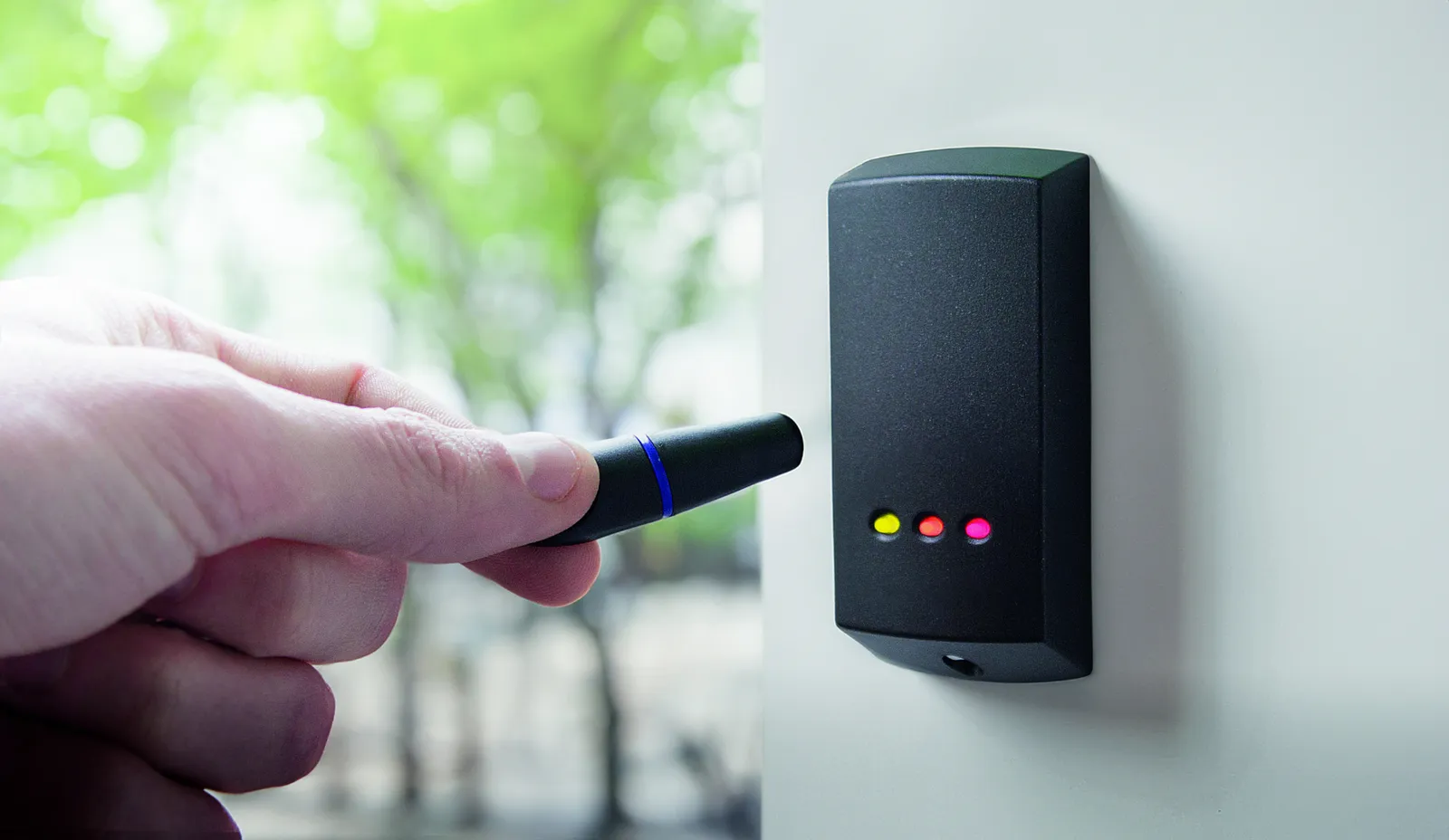
What We Offer
Full access control solutions from standalone systems to enterprise-grade installations.
Access Control Process
From security assessment to ongoing credential management — here's how we secure your premises.
Security Assessment
We evaluate your premises to identify entry points, traffic flow and access requirements.
Security Assessment
We evaluate your premises to identify entry points, traffic flow and access requirements.
System Design
A tailored access control solution is designed covering doors, credentials and user permissions.
System Design
A tailored access control solution is designed covering doors, credentials and user permissions.
Installation
Readers, controllers, locks and cabling are installed with minimal disruption to your operations.
Installation
Readers, controllers, locks and cabling are installed with minimal disruption to your operations.
Setup & Training
User credentials are programmed, the system is tested and your team is trained on management.
Setup & Training
User credentials are programmed, the system is tested and your team is trained on management.
Ongoing Support
Remote support, credential management and scheduled maintenance to keep access secure.
Ongoing Support
Remote support, credential management and scheduled maintenance to keep access secure.
Ready to discuss your project?
Get a free, no-obligation quote — or speak to an engineer today.
Why Choose Us For Access Control
Controlled Access
Restrict entry to authorised personnel only, with full audit trails and reporting.
Smart Integration
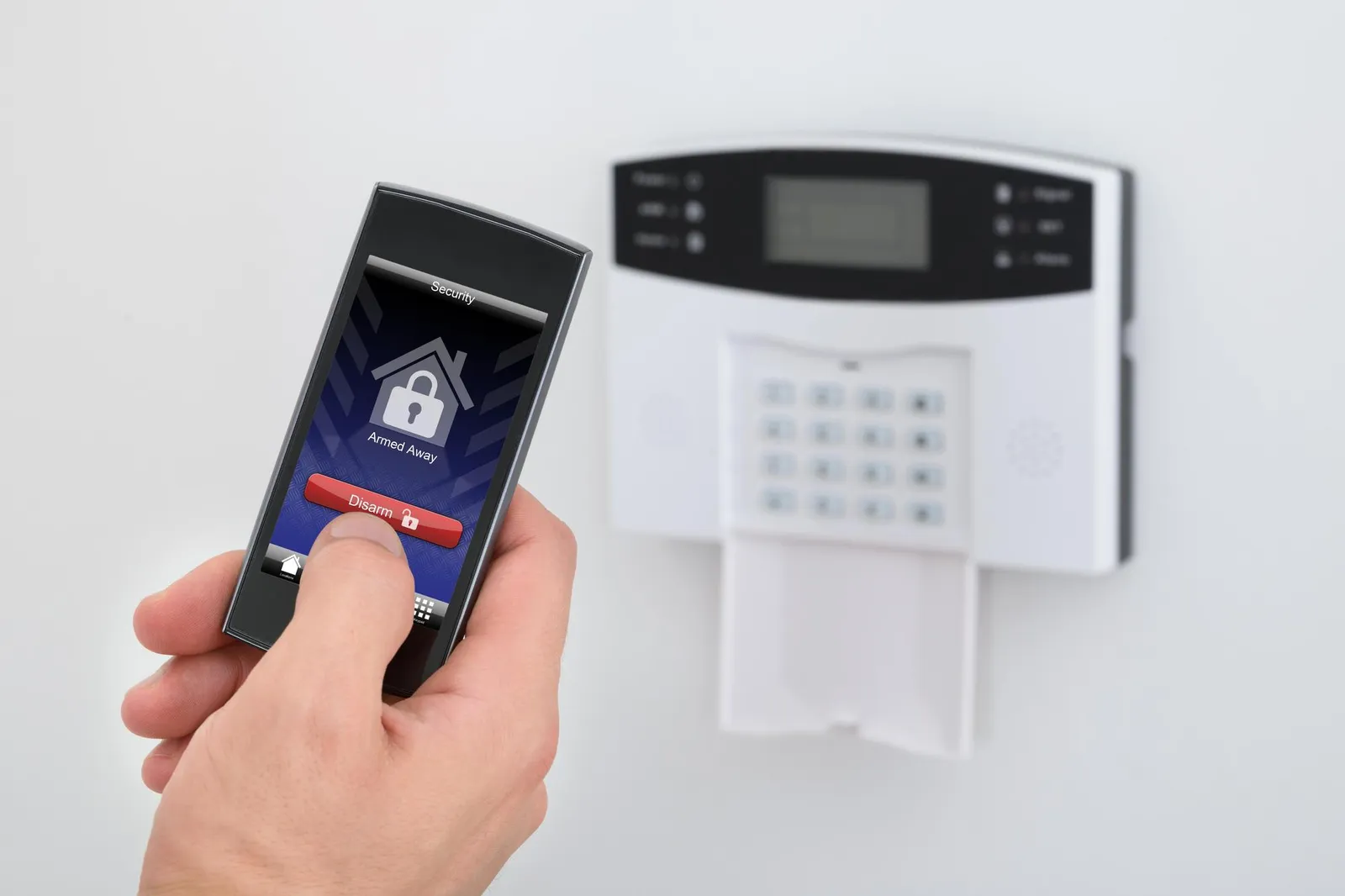
Modern systems with remote management via smartphone apps and cloud platforms.
Flexible Solutions
From standalone door entry to fully integrated multi-site commercial systems.
Ongoing Support
Full installation, maintenance and support to keep your access control running smoothly.
What is actually on your cards and fobs
Cards and fobs do most of the work on commercial doors, and what matters is the format they use, not what they look like. The 125kHz proximity credentials still in use can be copied with a handheld cloner, and plain MIFARE Classic was broken years ago. Current 13.56MHz credentials with diversified keys are the sensible baseline.
The wiring between reader and controller deserves the same question. Wiegand is the older arrangement and is unsupervised, so a cut or tampered reader cable goes unreported. OSDP supports supervised communication and, with Secure Channel enabled, encryption, which is why we specify OSDP-capable readers even where a site will not enable it straight away.
The weak point is usually the process around the credential, not the credential itself. If nobody owns revocation, a leaver's card still opens a back door months later, so settle at design stage who may cancel one and who tells them. Credentials can carry an expiry date so contractor access lapses by itself, be withdrawn remotely from the management platform, and appear on a report of credentials unused for ninety days.
Biometrics and video entry
A fingerprint or hand reader removes the shared and borrowed credential. The practical questions are enrolment and exceptions: somebody must register every user, and you need a route in for wet hands, gloves and the finger a reader will not read. Plan that fallback before rollout, not after the first complaint.
Biometric data used to identify a person is special category data under the UK GDPR and the Data Protection Act 2018, so it needs a lawful basis, a separate Article 9 condition and a data protection impact assessment, which the ICO expects for biometrics and which is mandatory at scale. Consent is hard to rely on with your own staff, because the relationship is not an equal one, so a workable alternative must exist for anyone who declines.
A reader that holds a mathematical template rather than an image reduces the exposure, more so on the user's own card than in a central database. The duty stands either way.
Video entry hands the decision to a person instead of a credential, so the questions are where the call lands and who answers when reception is unstaffed. The panel is a release path in its own right and records images of callers, so it inherits the locking decisions below and a retention period.
At the door: locking, release and reach
Two locking types cover most doors. An electric strike replaces the keep in the frame and suits a latched timber door. A magnetic lock needs no mechanical engagement, which is forgiving on glazed and double doors, but it does not latch, so a fire door held by one still needs its own latch.
Which way a lock fails is a fire-strategy decision before it is a security one. Fail-safe hardware is locked while powered and releases when power is removed, so a maglock is fail-safe by nature; fail-secure hardware stays locked when power is lost. Fail-secure is permissible on an escape route provided escape is achievable mechanically — a lever handle or panic hardware, no electricity involved — so record the choice against the fire strategy door by door.
Every item of ironmongery on a fire door has to suit a fire doorset and be fitted the way that doorset was tested or assessed. A lock morticed into the leaf needs the correct intumescent protection and a fixing method the door's certification allows, as does a cable transfer through the leaf. The door still has to close and latch unaided.
Reach and effort are legal matters too. Approved Document M covers control heights and the force needed to open a door, and the Equality Act 2010 makes reasonable adjustment a duty, so readers and release buttons go within reach and work without a tight grip. The closing speed needs setting for the slowest user.
The fire alarm interface and BS 7273-4
BS 7273-4, the code of practice for the actuation of release mechanisms for doors, attaches its duty to one case: a door held locked by electrical means against the direction of escape. A self-closing fire door that opens on its lever has nothing to release, and leaving egress mechanical is often the simpler specification. Battery-powered and wireless locking suits escape doors for that reason — the inside lever always opens — not because it drops on alarm.
Where a door must be held locked on an escape route, the standard sets actuation categories by how critical release is. Where failure to release would be critical, the signal comes directly from the fire detection and alarm system over monitored wiring, not indirectly through another system that might be offline. Any escape-route door held locked by power also needs a green emergency door release beside it, cutting lock power independently of the access control electronics.
Commissioning turns intention into evidence. Every door held locked by electrical means against the direction of escape should be seen to release with the panel in alarm, and to release when lock power is removed. Where egress is mechanical, the test is that the lever or panic hardware opens the door with the system powered down. Either way the result is recorded and handed over with the as-fitted drawings. On an existing system, that record is the only proof the interface is real.
Frequently Asked Questions
Related Services
Other security and fire safety solutions we provide.
Access Control Installation Near You
We install and certify access control systems across Gloucestershire, Bristol, Worcestershire and the West Midlands. Jump to your area:
Need Access Control?
Contact us today for a free consultation. We'll design a system that meets your security and compliance requirements.